The late 90s leading into the early 2000s were filled with crossover fighting games, especially with Capcom, as Marvel vs Capcom and Capcom vs SNK both went on to become some of the most beloved fighting game franchises of all time. I may not have grown up in the era of these fighters, but I hold a lot of respect for them as a crossover game in many other cases can often lead to laziness. Instead, Capcom used it as a chance to push the boundaries of what fighting games could be, and create unique experiences still worth going back to no matter what year it is. Today though, we aren't talking about a crossover fighter made in the late 90s, and it's one not even made by Capcom. Sometimes fans can deliver experiences that are on par with the greats, and in my eyes, Capcom vs Square is one of those games.
A roster of weirdos
The first thing that may come to your head when thinking of what a Capcom vs Square fighter might look like is probably those big well known characters, the Cloud Strifes and Mega Mans and such. However, this roster constantly surprises and excites me, skipping over those more obvious characters who, by nature of fame, already have plenty of fanmade adaptations, and instead, goes for more weirdo picks that really help make the game feel unique. From Agrias and Sundown Kid, to weirdo picks like Hugo and Ershin, the roster feels inspired in a way I feel is often missing from other crossover games. It feels authentic in the same way some of those initial crossover games in the 90s did, with characters clearly added because of dev bias. I think this alone makes Capcom vs Square worth the price of admission, but of course there's more to the game then just the cast of characters.
The current planned roster for CAPCOM vs SQUARE.
Engage the battle
It's hard to overstate how much depth the battle system has in Capcom vs Square. Honestly, I had to rewrite this paragraph a few times as I realized, I was just writing a guide to game mechanics. Attempting to not do that here, the biggest draw of Capcom vs Square is its unique "Engage" mechanic. Before I explain the mechanic, I want to shout out jay, who is the lead battle director on the project currently. You may know him from his own game, Battle Dudes, and if you do, you probably understand how much he cares about game depth. The "Engage" mechanic essentially operates as a multi-use cancel mechanic, offering a plethora of different options for different amounts of its own meter. I won't go too in depth on the mechanic itself this time, as I think playing the game for yourself is the best way to figure it out, but the effect the mechanic has on gameplay is massive. It leads to the game having a fluid but also methodical rhythm to it, where both players practice good meter management in an effort to get in and do their combos. Without Engage, most combos tend to be shorter and simpler, creating more interaction points in a game, but once Engage enters the picture, combos get longer and more convoluted, and some really crazy stuff can happen as a result. This leads to swings in battle that feel earned, and I never felt robbed in a way that didn't feel deserved. Accomplishing the balance of a game that feels like you can pull off some insane stuff, while also making it fun for both players, continues to prove to be one of the hardest aspects of fighting game development, but jay absolutely nailed it here.
A Zero combo in CAPCOM vs SQUARE, credit to Daigo Ken for the footage.
The exaggerated swagger of a 90s crossover fighter
yahyadrawzzz is the lead developer on Capcom vs Square, and he is responsible for one of the most cohesive packages I've seen for a fighting game. Everthing, from the gorgeous custom spritework, to the stylized backgrounds, to the UI design, evokes a very specific style of 90s fighter in a way that feels more authentic to the art than just to evoke nostalgia. When designing a fanmade fighting game, it's easy to fall back on tired nostalgia traps and lazy repackaging of old assets. Even some of the most popular official crossover fighters of all time have fallen into this trap before. But the clear care and intention behind all of the art direction in Capcom vs Square makes it a game that I could easily pick out in a crowd. Nothing about it feels lazy or half assed, and as someone who understands how difficult it is to develop the art of a fighting game, I have infinite respect for a fighting game that successfully pulls off an artstyle that's this unique and expressive, while still referencing its source material and inspirations.
So much to talk about
To be completely honest, this game is one where an active dialogue on it would be more of a service than my glorified rambles. There's so much I feel like I can't even confidently cover here. So many character specific unique mechanics caught me off guard, like a hit of armor when a certain mechanical limb is used, or an entire RPG style leveling system baked into a moveset, mechanics that made me grin at how inspired and fun they were. Not to mention some of the system wide stuff going on, like the incredibly unique super jump movement that is unlike anything else I've played, and of course the soundtrack done by GenesisKeys, which lends a very unique feel to the game.
So what’s the verdict?
This is, in my opinion, one of the most unique and well thought out fighting games I have ever played. If you're a fan of those 90s style crossover fighting games, you are doing yourself a disservice by not checking this one out. A lot of fangames can get caught in the trap of only referencing what has been without offering anything of its own, but Capcom vs Square offers you a robust combat system, an interesting cast of characters, and a stunning sense of style. This is the gold standard of fangames, and is right at home next to other greats of the crossover fighter subgenre. This is an easy recommendation from me, go play it right now, and if you tried it previously, try it again!
Thank you for reading this far. I'm honestly not sure if anyone reads outside of a few people, so if you do read and enjoy this, I would love to stroke my ego just a little bit. On a more serious note, I am trying to get back into the swing of things, although with art school finals rapidly approaching, we'll see how it goes. I'm either going to cover Chaos Code next week, or talk about BBBR rollback (which is happening!!), or I'll just write about my general feelings on the genre, as I have seen a lot of takes on old and new fighting games that I find... interesting. Until next time!
For those of you who know me well or follow my work, my main fascination the past couple years has been the doujin fighter series Big Bang Beat. Well, Big Bang Beat was originally based on an eroge by the name of Daibanchou -Big Bang Age-, made byt the one and only AliceSoft. However, it was not the first fighting game based on Alicesoft properties, and not even the first AliceSoft fighting game to get a sequel. That honor goes to the Alicesoft crossover fighter, commonly referred to as Alice Senki 2.
Even the low tiers have sauce in this game
From Eroge to Kusoge
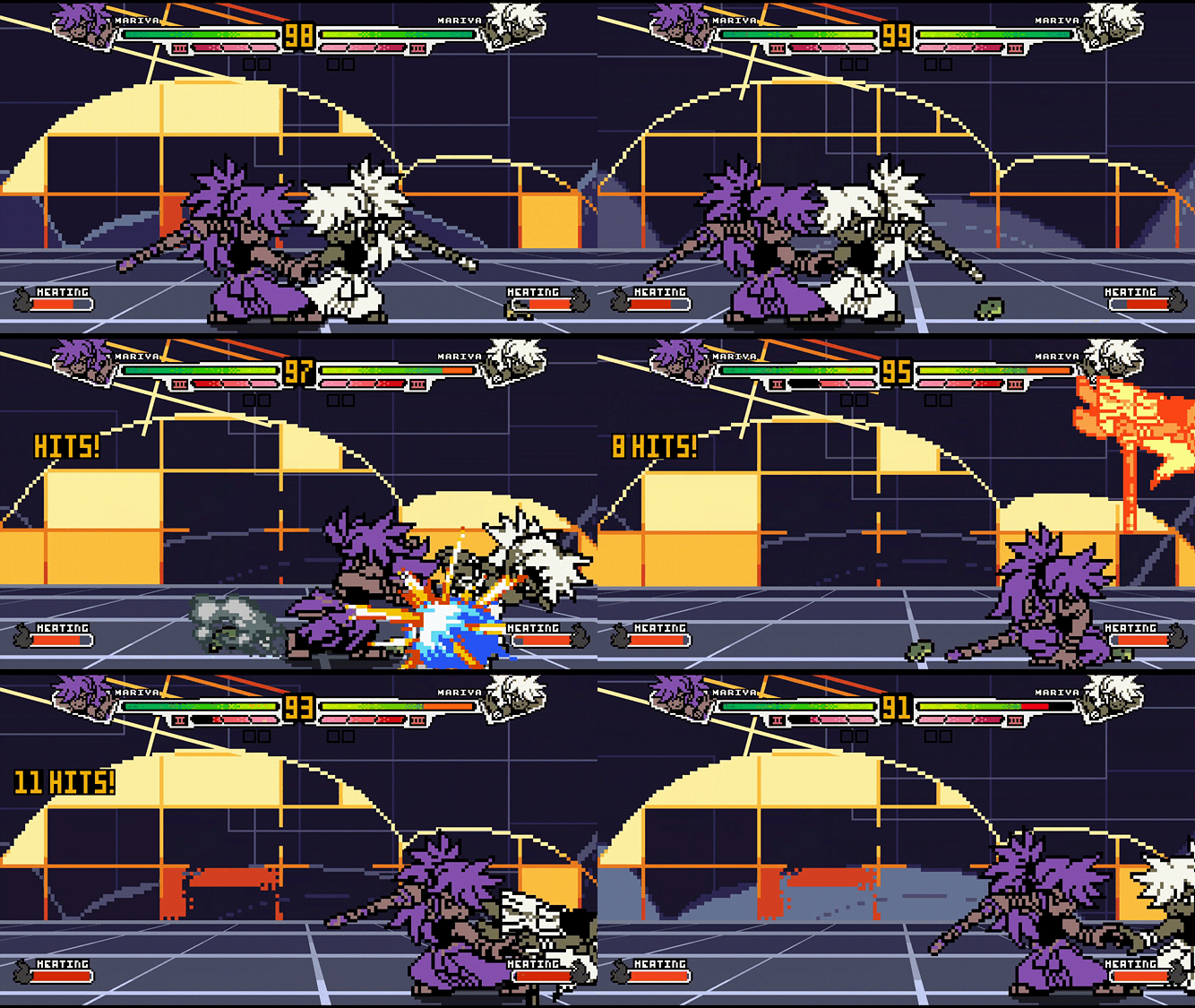
For those in the doujin fighter communities, you're probably well aware of this fact, but the truth is, eroges make great fighting games. Alice Senki 2 is, for the most part completely SFW (there is a brief shot of boobs in the background of an image in the opening that has stayed up on YouTube for over a decade, but I won't tell if you don't). In addition, many character designs and powers transfer over well, whether it be Rance's slower paced sword and summon combat, Hatsune's Byakuya-like anime fighter gameplan, or Menad's, uh... being not very good, I guess. Every character feels fleshed out, and all of them have something interesting going on, and with a cast of 18 characters, it's easy to find at least one that has the kind of bullshit you like.
66L
Alice Senki 2 is, for our purposes, a full blooded anime fighter. However, jumps are generally floatier, and moves are generally slower, leading to a more methodical and grounded gameplan for most characters. However, once you start the party, the combos can get pretty ridiculous and entertaining. Something unique to Alice Senki 2's basic mechanics however, is the reliance on dash attacks. Every character has an alternate dash attack for each of their three main buttons, and the dash attacks range from overheads, to pressure resets, to launchers. In pressure and combos, dash attacks are often your main form of extensions and how you access your best combos. It can take a bit to get used to this, but once you understand dash attacks, it makes combos feel fluid and fast-paced.
Escalayer combo done by yours truly
The part where I talk about art or whatever
Alice Senki 2 is maybe the most PC doujin fighter-looking PC doujin fighter I have ever played. 3D prerendered backgrounds, a certain type of sprite, and the design of the meters in the game, all evoke a certain era of doujin fighters, and I honestly love it. In addition, the soundtrack is surprisingly robust, and I found myself jamming to quite a few of the songs. Demon Rance's theme in particular is a vocal theme sung by the character's voice actor and is quite fun. But who is Demon Rance? Well...
4 Secret Characters
Yeah so, there are 4 secret characters in Alice Senki 2. Or rather, the more accurate thing to say would be, there were 4 secret characters. As of the last update to the game, the devs included a completed savefile, so unlocking everything is no longer necessary. The characters however, are quite interesting. All but one of them is an EX variation on Rance, Miki, and Hanny King, and while Miki and Hanny King aren't that interesting, mostly boasting an enhanced set of moves, and a ridiculous amount of health, Demon Rance is different. This version of Rance has an airdash he didn't have before, and an entirely new set of assists with an entirely new ally. While all of the EX characters are completely broken, and turned off completely in the settings by default, the obvious care that went into making them at least slightly interesting is something I have a lot of respect for. However, you may have noticed there was one more secret character I did not mention yet, and that is Nalzgis. She is a setplay zoner with 3 (yes actually) airdashes, and setplay reminiscent of old Guilty Gear Venom and Testament. She is one of the more interesting characters in the game, and honestly deserves more written bout her, but unfortunately she runs counter to everything I am good at in fighting games, so you will just have to discover her for yourself.
The only image available of Nalzgis from the files
So what's the verdict?
Alice Senki 2 feels very early doujin fighter, but there's a certain sauce, a certain flair to it, that keeps getting me to play again. An incomplete Mizuumi, a dead server, and only a few passionate fans carrying the torch, this feels like a true hidden gem in an age of fighting games where it feels like every game gets its chance. So beyond just my usual "go play this game", I want to use this as a sort of call to action. Post clips, record combos onto Mizuumi, find insane tech, do whatever you feel like, because this game deserves a community. This game deserves to be picked apart, played, joked about, whatever. Please help me keep this game alive. My articles can only do so much when it comes to fighting games, as they are such a tactile genre, so I implore you if anything about this interests you, please go try it out. Make sure you move the save file from awn10006 to the main folder, and run the game in Japanese on locale emulator, and you should have no issues. Thank you for your time, now go play Alice Senki 2 and show me what you find!
*If you made it this far in the review, lemme know what you thought of it on BlueSky! I appreciate feedback, and I’d also like to know if anyone ends up actually trying out the game because of this. Does anyone even read these small author's notes, or do people think it's the same every time? I don't know, but this was a fun article and I want to do more on Alice Senki 2 in the future, perhaps a stream... I am pretty proud of myself for keeping up this schedule and I don't plan to stop now, so stay tuned!*
For those of us in the doujin fighter realm, the Fate franchise comes up a lot more often than one might expect. Between full on fighting games like Crucis Fatal+Fake, Fate Unlimited Codes, and our topic today, to guest appearances in other franchise fighting games, such as Nitroplus Blasterz, and Melty Blood Type Lumina, Fate has a long history of being all over the doujin fighter community. Hell, French Bread even faked a Fate fighting game for a April Fool's joke (something French Bread and Fate fans have never really forgiven them for). So what makes Fate/Sword Dance stand out in this sea of Fate fighting games? Well, there's a lot actually, but let's start with the developer.
Rapid Fire
Fate/Sword Dance was created by a doujin circle that was known as Rapid Fire at the time. This was, as far as I can tell, their first fighting game ever, but it wasn't there last. In fact, Rapid Fire is a core piece of the history to my favorite doujin fighter series of all time, Big Bang Beat. You see, later on Rapid Fire rebranded to the name they're better known by, NRF, and created Big Bang Beat 1st Impression. This just proves my theory that every doujin fighter can be connected together, but that's neither here nor there. What is interesting about Fate/Sword Dance when compared to Big Bang Beat 1st Impression, is that they are pretty much complete opposites when it comes to their gameplay.
An image from the game files of Saber doing her DP.
Samurai Gear XX
Fate/Sword Dance on the surface is a fairly standard Guilty Gear clone, as many doujin fighters of the time were. You have four main attack buttons and an EX button the operates essentially the same as Dust in Guilty Gear does. However, the first main deviation is on the character select screen. When selecting a character, you have the choice between "Rush" or "Strong" style. Each one has a piece of a full anime fighter, so you never quite have all the tools you might expect. Strong allows you to cancel a special into a super, but only gives you a single bar of meter. On the flip side, Rush gives you 3 bars to play with, and gatlings as well, but cancelling a special into a super is impossible. Admittedly, this method of dividing up mechanics put me off the game at first. Combos in either mode feel like they're just missing one things to work, but they never quite do. However, with a bit of messing around, I found some decent combos, albeit they aren't as hectic as one would expect from a "Guilty Gear Clone".
A basic Saber combo I found.
The Real Glory of Fighting Games
Fate/Sword Dance is hard to get a grasp on if you're used to jumping into training mode and labbing combos for hours. However, jumping into arcade or story mode and experiencing the gameplay for yourself will make the game make a lot more sense for you, or at least, it did for me. The tools of the game lead to a generally slower paced neutral, akin to something more like SamSho, with methodical neutral leading to only a few hits most of the time. Like SamSho, this game is best experienced by playing against an opponent, and it is where the game truly shines in my opinion. If you do want to try out the game, the way to do it is versus, as my descriptions really can't fully get across what the game feels like in combat.
Esoterica
I find it hard to write anything about this game that applies all the time. While the game only has 8 playable characters, each one is so different and unique that it's sometimes hard to find universal things. Assassin has a teleport dash, limited movement, but some of the better combos in the game and a rekka that leads into a dust combo. Rider has very limited combos, but plenty of strong zoning tools and lots of movement. Each character is so incredibly unique that honestly, just playing the game is the best way to figure out what's up with them. Suffice to say, even with only 8 characters everyone should be able to find at least one character they find interesting, it is an inevitability with a cast as varied as this.
The main cast of Fate Sword/Dance, minus the two secret characters.
So what’s the verdict?
This game was really hard for me to break down, as for a long time, I played it with certain expectations in my mind of how a doujin fighter should play. If you come into this game expecting Guilty Gear, you will be very disappointed. No hitstun or hitstop, limited combo tools, and slower paced movement lead to this game being a lot slower paced than one might expect. But at the end of the day, I think that might be what makes this game so special. In a sea of doujin fighters that all feel similar, Fate/Sword Dance doesn't feel like anything I've played before. It's an anime fighter shell filled with SamSho gameplay, and I'm kinda into it. I recommend at least giving the game a shot if you're interested, it is at least worth a look beyond just "another Fate fighting game".
If you made it this far in the review, lemme know what you thought of it on BlueSky! I appreciate feedback, and I’d also like to know if anyone ends up actually trying out the game because of this. Shoutout to MrMKL for playing the game on stream, it did genuinely help in collecting my thoughts on this game. Next week has already been decided, I want to talk about Alice Senki 2, a game that will probably be just as hard for me to collect my thoughts on. Wish me luck please... And stay tuned, I might try to stream again soon!
In my constant and never-ending search for fun and unique fighting games, a lot of games crash my path. However, Sakura X Clash was actually before all of my niche fighter obsession, before I went on a journey to play every fighting game ever. Before I was a fighting game fan, I was a Sonic the Hedgehog fan, and Sakura X Clash was something I found at SAGE, a yearly event for indie devs to show off initially Sonic fangames, but has since expanded to more than that. This history lesson is pretty boring in all honesty, but it's all to say, Sakura X Clash is a game I've known for a while.
Clash at Sakuragawa
Sakura X Clash's first influence and most obvious influence is the Neo Geo Pocket fighting games. If you have never seen NGPC fighting games, I recommend you look them up as they are a crazy example of a handheld system being home to some genuinely amazing fighting games. Sakura X Clash is a sort of spiritual successor to those SNK handheld game aesthetic wise. It's control scheme is a classic 4 button style that SNK uses, with a light and heavy punch and kick. The movement of the game is a bit faster paced than your usual KOFs, at least in my opinion, owed in part to all the universal movement mechanics which I'll touch on later. However, KOF players will probably feel pretty at home with the game, as it is easily the game that Sakura X Clash is closest to in gameplay feel. However, Sakura X Clash does enough to separate it from being just an SNK fangame, and a lot of that comes from the many universal mechanics offered.
Sakura X Clash's most recent trailer.
You Want it, We Got it
Sakura X Clash has an absurd amount of universal mechanics available to the player, rivaling anime fighters in terms of complexity. At a base level, you have a dash and backdash, a dodge and air dodge, a short hop, and air recovery options. These make the game feel very freeform in its movement, and while I will always be more of an airdash guy, the game offers plenty of options to sink your teeth into. Where the game goes above and beyond in my opinion are the metered mechanics however. EXs, supers, level 3s, a metered dash cancel, a dodge out of pressure, a guard cancel, and a character specific ability, or "aura trait". This is quite a lot of mechanics, but it never feels overwhelming when playing, as each move has a pretty clear usage. Needless to say, mechanics don't always equal depth, but from my time playing, I keep finding new ways to use the mechanics to my advantage, and while that would normally overwhelm me, it never feels like the mechanics outplay just good fundamentals.
A Character for All Spring
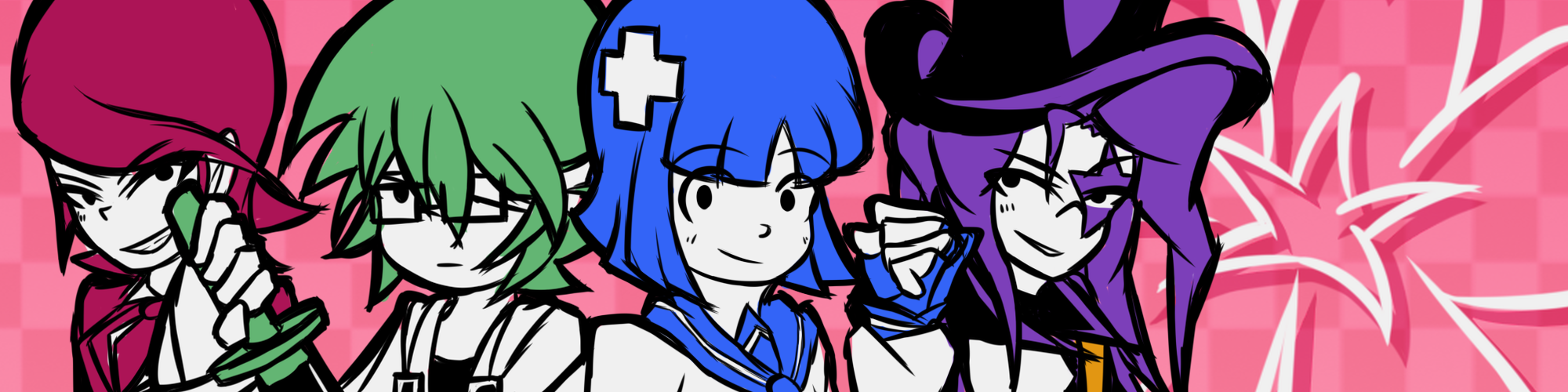
Sakura X Clash's roster is one of the strongest points of the game in my opinion. From a standard shoto girl, to a heavy metal guitarist in a top hat, to a lazy supernatural shapeshifter, the cast is extremely varied in aesthetics and playstyles. I personally play Lillykage, one of the "EX" characters, because she has an airdash, fantastic rushdown pressure, and cool anime-esque combos. There are 18 characters to choose from, and chances are one of them will meet your aesthetic and gameplay preferences. I recommend just going through roster and seeing if any of them catch your eye. The "EX" characters are designed to be competitively viable, while tending to be on the strong side, they also have clear weaknesses and it's clear a lot of work was put into making the game so ever character can be enjoyed.
IKEMEN Go Play the Game
The IKEMEN engine, a successor to MUGEN, an engine so well known I think there's no need for me to even explain it, has shown itself to be quite the tool for indie fighters. From Capcom vs Square and Sega vs Capcom, Hyper DBZ, Outer Dimension, and One Piece Fighting Adventure, IKEMEN and MUGEN have continually proven themselves to be more than a silly dream match creator. Sakura X Clash has a quality that rivals and often surpasses many other modern fighters, indie or otherwise. While still technically still in a demo state, the game is complete by most standards, and is an incredible package. Sometimes I worry about telling people a game was made in MUGEN or IKEMEN as I feel it tends to come with a certain negative connotation, which is unfortunate as in my opinion, some of the best indie fighters in development currently utilize the engine to make truly incredible things.
So what’s the verdict?
Sakura X Clash is more than worth your time. It has deep gameplay, a fun cast of characters, a pretty aesthetic, and a full set of modes, all for free. This game genuinely deserves all the love in the world, and has proven itself as much more than just an NGPC fangame. It continues to be one of the first indie fighters I use as an example of the stellar quality being put into indie fighters. If you want to support the development of the game, as you should, you can visit the website, which has more information on the game. It also has a Mizuumi wiki, if reading through information that way is your thing. Either way, the developer is a lovely person, the game is incredible, and if you haven't given it a try, do so right now.
Why are you still here, I told you to go play Sakura X Clash. Next week I'll tackle another game, don't worry. In other news, it was recently my birthday, and I'm now [REDACTED] years old. I hope people are actually reading these articles, because I'm having a lot of fun writing them, even though collecting the images and videos can be a bit of a pain. Until next time!
I'm taking a short break from the very niche fighters, to talk about just a regular old niche fighter, the Team Arcana and Square Enix (yes that Square Enix) fighting game Million Arthur: Arcana Blood. It is based on the Million Arthur franchise. To say I know nothing about the franchise is an understatement, beyond the fighting game I have never seen or interacted with any Million Arthur media. I hope fans of the series give me a bit of leeway, as much like Fuuka Taisen it is a franchise I just never bothered to experience outside of the fighting game spinoff.
Welcome to the World of Britain
Million Arthur is for the most part a fairly standard 3 and a half button fighter a la Blazblue. You have your light, medium, heavy buttons, and then your elemental attack button, which correlates to your character's element. I'll circle back on the elemental mechanics later, as it is one of the game's main gimmicks, but it doesn't directly effect gameplans very often. What does however, is Million Arthur's other big gameplay mechanic, the assists. There is a collection of 31 assists in the game, each with a unique ability and elemental affinity. They each can cost 1-3 "mana", which appear as little blue jewels underneath the assist cards on the HUD. The stronger assists generally cost more, and therefore lock you out of assist actions for longer. Assists are used for pretty much everything in the game, but each character demands a different set of assists depending on their gameplay style and elemental affinity. Building your "deck" of 3 assists in a way that allows you to play how you want is incredibly important to the game and as a side effect, one of the most unique mechanics I've seen in a fighting game such as this. The closest I can think of to this mechanic is Dengeki Bunko Fighting Climax's assists, but even there, you only get one real assist to play with. I have genuinely sat for a half hour going through assists and figuring out which ones will benefit my gameplan and combo structures the best, and that is easily one of the coolest parts of the game.
An image of Million Arthur from Square Enix.
Burn, Freeze, and, uhh... Windy..?
One of the other main mechanics of Million Arthur is the elemental mechanics. Each character and attack has a different elemental affinity, between Fire, Ice, and Wind. All of those attack obviously have the visual differences you'd expect form the different elements, but they also apply that element with the attack itself. Fire attacks do damage over time, Ice adds hitstun, and Wind gives health regeneration. In addition to this, each element has a counter element, with a basic weakness triangle. What this means is if, for example, you land a Fire attack and then follow up with an Ice attack, it will always cause a counter hit trigger, even in the middle of a combo. In addition to this mechanic, landing multiple attacks of the same affinity deal bonus damage depending on how many attacks of the same element have landed, and resets when a different element is used. These mechanics mainly come into play in combo routing, as a lot of optimizations revolve around using counter elements for extensions, and then stacking elemental attacks for the damage boost it gives. There are more mechanics involved, such as the Enchant Boost install state, but that's something I think is best explored by playing than me just talking about it. Elements are something completely unique to the way Million Arthur functions, and is worth the price of admission alone.
A Koume combo done by yours truly.
Anime Fighter Goodness
Million Arthur: Arcana Blood is very much an anime fighter through and through. While it can feel a bit slower than other anime fighters, it feels in the vein of stuff like Dengeki Bunko, Blazblue, and other Team Arcana entries. If you're a fan of anime fighters, this game will probably make sense to you control wise almost immediately. The one thing I had to get used to was the universal motion input of quarter circle back. Quarter circle back and A, B, or C gives you the respective assist's move, and while a lot of moves look like they should use quarter circle back, you have to get used to the fact that that input is forever dedicated to the assists. Other than that, the game has a fair amount of weird links and dash cancels, black beat mechanics, and weird routing with assists, and it all feels like anime fighter heaven. If you're worried about game feel, worry no longer, this is an anime fighter in every way.
...Wait, is that Iori?
Million Arthur has quite a few guest characters, between the assists and playable characters, but probably the most notable one is Iori Yagami, from the KOF series. For the 5 people out there that have wondered "what would Iori be like in an anime fighter..?" first off why, but second off your thoughts have been answered. Not only is he in this game, but he's a relatively easy to pick up character, and a strong beginner-killer too. He is clearly given a lot of love by the developers, and as such still feels very Iori, while also fitting into the anime fighter format perfectly.
A frame from Iori's gorgeous super.
The Power of Lesbians
So just like the previous game I talked about, this game too has a notable super. Wildcat Arthur has potentially the most lesbian super I've ever seen in a fighting game, and while I really don't have anything else to say about it, I thought it important to at least include it here, as it has become something notable to the game.
Unleashing lesbian power upon the opponent. I'm trying to keep videos to a relative minimum so go look it up if you wanna see it in full (or just play the game!)
So what’s the verdict?
Million Arthur has a lot of sentimental bias to me, as it was one of the game I played with my friends back in high school. Putting my own nostalgia aside for a moment, while the game does have a few issues (the PC port has the tendency to crash for no reason every once in a while, and the infamous Nice ChinChin censorship which you will have to look up on your own), I think the core of the game is one of the most unique and interesting anime fighters ever made. If you have the opportunity and you haven't played it yet, it is in my opinion a must play game. Do not sleep on this one folks, the world of Britain awaits your arrival... And also Iori is there.
If you made it this far in the review, lemme know what you thought of it on Bluesky! I appreciate feedback, and I’d also like to know if anyone ends up actually trying out the game because of this. I'm gonna try to be semi-weekly with these "reviews" (me gushing about games I like), so if you have any suggestions of games you wanna see talked about, lemme know I guess. Stay tuned for now, I’ll hopefully post some new content soon!
If you’re like most people, you’re probably staring at the screen right now, and thinking “what the hell is Fuuka Taisen?” Maybe a few of you are thinking “Huh, Fuuka Taisen, I’ve seen some clips of that game…” These are the majority of reactions I expect from people, but there’s more to this game than just another anime fighter. Under the hood, this game is weird, cool, and has one of the most insane supers ever.
Okay but what is it actually?
Let’s start at the beginning. What is Fuuka Taisen? Well, it is (kind of) an anime fighter, based on the manga/anime series, Mai-HiME. Now, you’ll have to forgive me here, I am not personally well acquainted with the Mai-HiME series, so I’m coming at this game from the perspective of a fighting game fan, not a Mai-HiME fan.
As far as the game itself goes, it’s a fairly standard 3 button anime fighter, with a 4th button dedicated to the “Child” mechanic, an unfortunate name for a pretty interesting and unique mechanic. The reason I said this was only sort of an anime fighter earlier, is because characters vary wildly in their movement options, from characters like Midori with only one jump and no airdash, to our shoto protagonist Mai, who has a double jump and airdash. In addition to all the character specific movement quirks, the game is a fair bit more floaty and slow than your typical anime fighter. In all honesty, that aspect of the game’s feel turned me off of the game initially, but once you get used to the flow, it starts to make a lot more sense.
An image from the game files of Mai divekicking.
Art maketh the game
I’ll talk more about game mechanics in a bit, but let’s take a small detour to talk about one of this game’s defining traits, the art. One of the most famous aspects of the game is that all the art was drawn by Toru Nakayama, probably best known for his work on the Mega Man Zero/ZX series. He has an incredibly distinctive artstyle, and a lot of people only really know Fuuka Taisen as “that one fighting game with Nakayama art”. However, while yes, his art in the game is very pretty and I am a big fan of it, it is not the only beautiful thing about it.
One of the story endings.
The spritework in the game is actually what initially drew me to it, and it cannot be understated how high quality all of the sprites are. I’m someone who tends to care deeply about a game’s aesthetics, and the sprites never fail to deliver for me, no matter which character it is. Fuuka Taisen also implements something I love aesthetically in fighting games, which is 2D sprites on 3D backgrounds. The backgrounds are a blend of 3D objects and 2D handdrawn sprites stacked in the 3D plane, and honestly, almost every background is beautifully rendered. There is no denying how gorgeous Fuuka Taisen is as a complete package… except for one small hangup.
A lineup of sprites from the game.
The game’s HUD is maybe one of the ugliest HUDs I’ve ever seen in a fighting game. It has no style or real substance to it visually, and is about on par with the most boring of MUGEN HUDs out there, which is an unfortunate blemish on an otherwise gorgeous game. Luckily, I don’t decide the value of games by the HUD alone, so let’s shift back into what everyone really cares about in a fighting game, the gameplay.
Helium Fighter
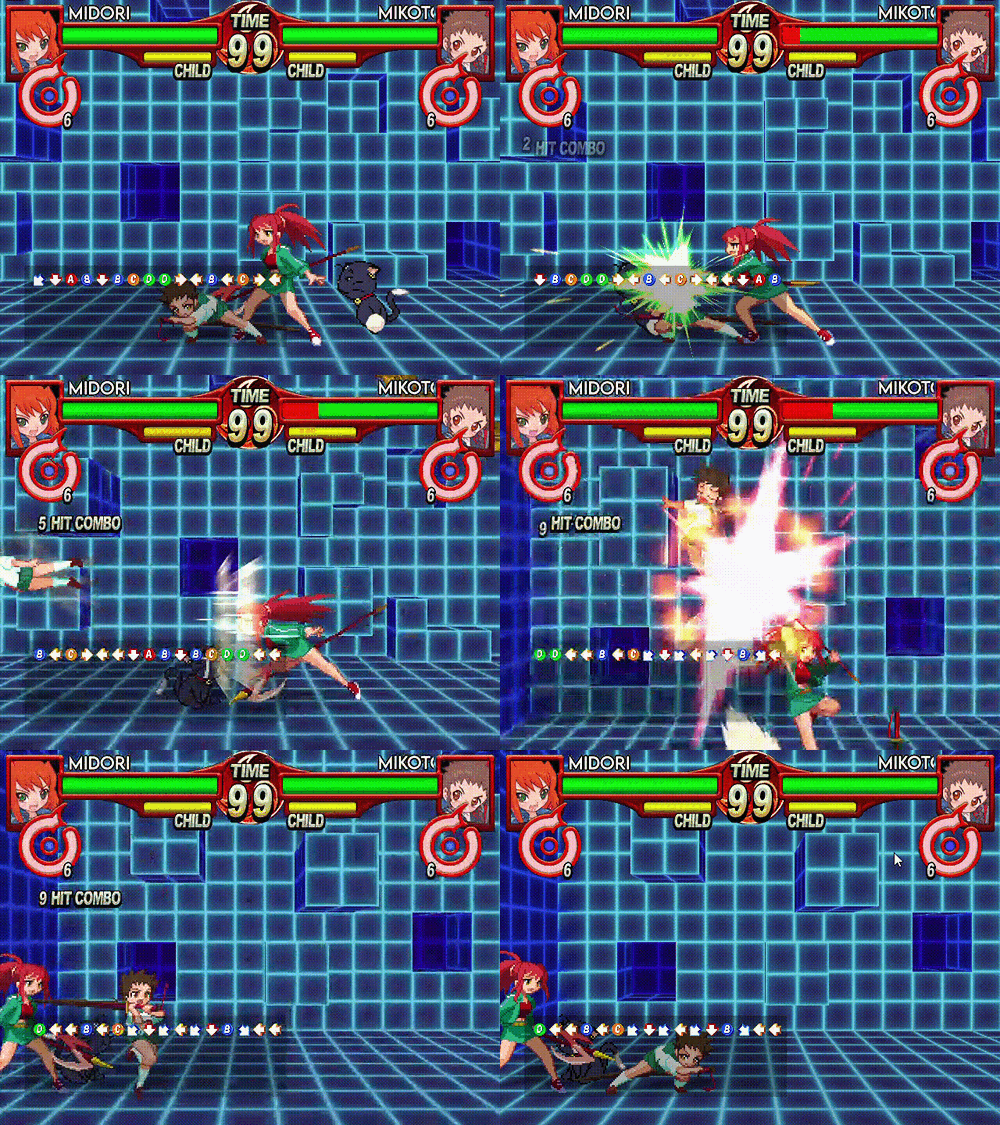
Fuuka Taisen has a very weird feel to it that will turn a lot of people off immediately. Most characters feel as light as a feather, and in addition, the input reader has an incredibly small buffer, leading to a game that feels both light and slow at the same time. Once you get used to it however, you’ll run into another roadblock to anime fighter bliss, and that is the combo system. Combos are surprisingly tight in Fuuka Taisen, and while many characters have loops, finding combos on your own can feel like a hopeless task, as for many characters, their moves feel like nothing can connect after them. This combo system is, in my opinion, one of the main drawbacks of the game, as it tends to polarize much of the cast. Some characters have insane loops, or very anime fighter coded combos, while others can barely do more than 4 hits before having to settle for oki. It ends up feeling like half the cast is from a completely different game than the other half, and while they might be strong in their own right, it can be tough to see a character you visually enjoy only for them to not play how you might expect. Luckily, not every aspect of the game is as polarizing as its feel, and its Child mechanic is one of my favorite gimmicks in anime fighters.
A BnB done by Parodx_LZT.
Why is it called that though
Yeah so, the Child mechanic is a bit unfortunately named in my opinion, especially when talking about the game forces you to inevitably say stuff like “Child meter”, but the gameplay is worth it I promise. Essentially, every character has a demon, or Child, that is used almost as Stands are in JoJo’s. Each character varies in how they use it, from Mai having a delayed fireball, Natsuki having a cannon wolf that allows for a lot of things, or Midori summoning giant tail whips from offscreen. This is, in my opinion, where most of the interesting elements of the game lie. The meter management of deciding when to use your Child for oki, or to extend a combo, or save it for later usage, leads to a lot of interesting plays in all aspects of the gameplay. I could probably go more in depth on the Child mechanic, but honestly, I think it’s something that is best experienced, rather than me just saying things.
Adding Bugs, Glitches, and an unfinished character
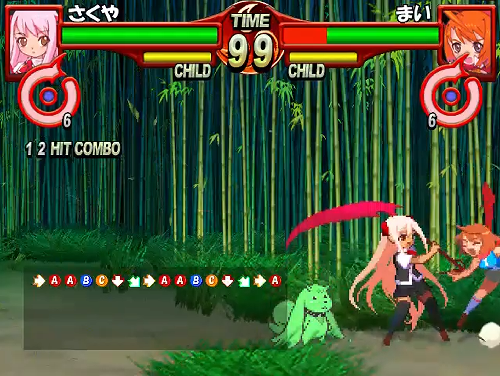
This is something that fascinated me when I first researched Fuuka Taisen, as these sorts of weird esoteric things tend to do. There are two main versions of Fuuka Taisen, and they are drastically different games. The one most commonly floated around in niche fighter circles these days, as well as the one with an English translation, is Fuuka Taisen Plus. While a lot of work has been put in by the community to fix bugs and repair unfinished characters, when Plus released, it was a broken hot mess of a game, that added a new character at the cost of breaking pretty much every single aspect of the game to a near unplayable state.
An image of Sakuya performing her infamous infinite (credit: Dr.Rook).
Even now, many people feel that Fuuka Taisen Plus is a lot less balanced and coherent as a game than the previous iteration. Now, the previous iteration, which took me a while to get my hands on surprisingly, is Fuuka Taisen 1.02 (5). From my personal experience, while Plus is more broken, it does feel a bit faster and more like what you would expect from an anime fighter, whereas 1.02 (5) is more consistent perhaps, but tends to be a bit slower and less combo heavy to play. At the end of the day, due to community effort, I think I personally prefer Plus a bit more, but it is an important distinction to make, and one I think most people miss about the game.
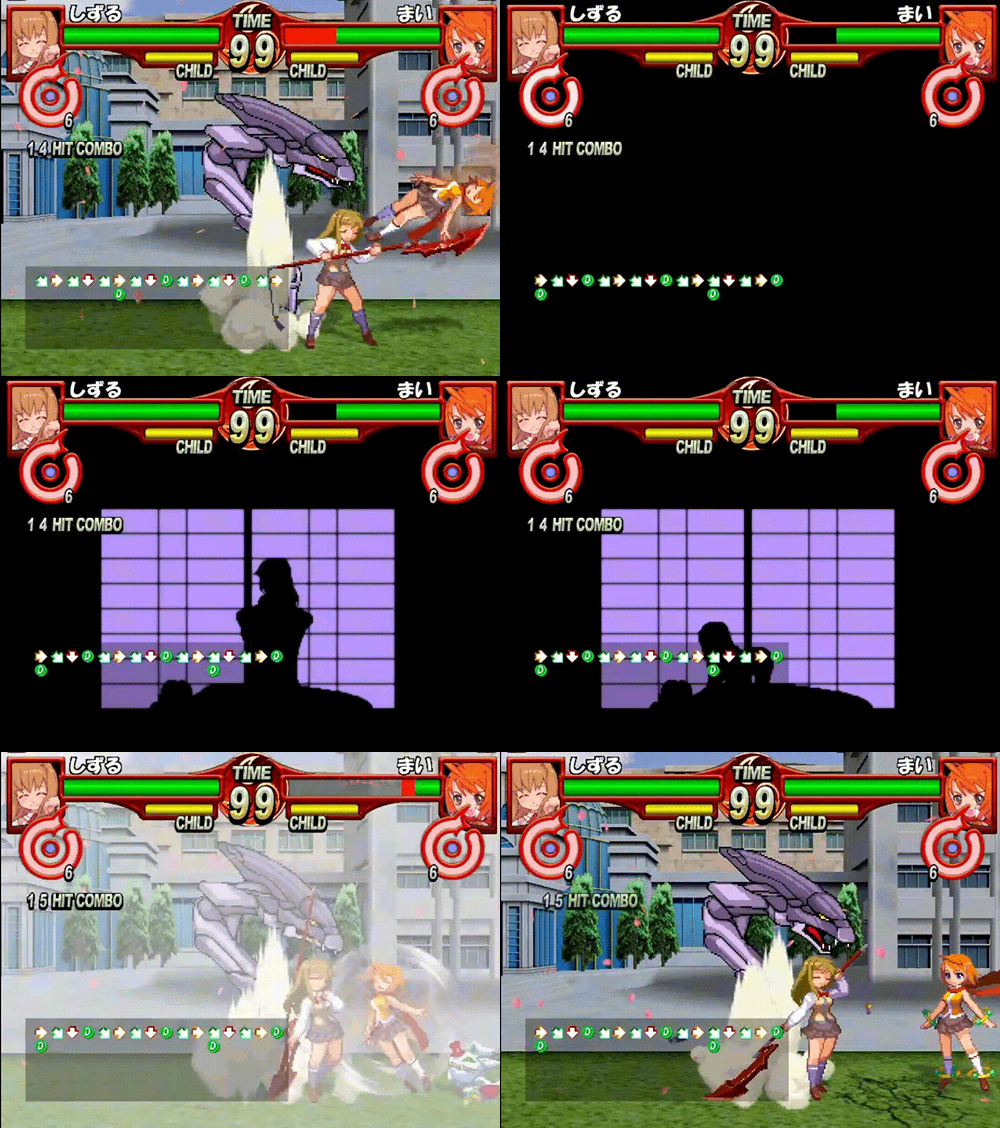
Fine, let’s talk about the sex super
Yeah, this is one of the other famous things about Fuuka Taisen, where the character Shizuru basically just has implied sex as one of her supers. It’s one of those things, where arguably that super is more famous than the character herself, but honestly after playing so many doujin fighters over the past few years, the shock of it has worn off a bit. Still, it is pretty funny to see people's first reactions to her super, and it’s something I think is notable enough to bring up in this review of the game. In addition, some of the ending art has some... questionable content, so just be aware going in that Fuuka Taisen is like that.
The infamous sex super...
So what’s the verdict?
Honestly, to this day I still struggle with Fuuka Taisen. I think it’s a game worth playing, no doubt in my mind about that, but at the same time, it feels awkwardly unique in a way I’m still not sure if I like or despise. If anything about this game interests you though, I recommend downloading the game for yourself and giving it a shot. It does have a lot of the weird game issues most old PC games do, so just be prepared for a bit of work getting it to play properly, but at the very least, it is an experience worth having.
If you made it this far in the review, lemme know what you thought of it on Bluesky! I appreciate feedback, and I’d also like to know if anyone ends up actually trying out the game because of this. I’m sure a lot of people expected my first post to be Big Bang Beat Revolve, but honestly there’s so much to talk about with that game for me that organizing my thoughts and also not writing 20 pages is hard, so it will probably end up being a bigger project down the road. Stay tuned for now, I’ll hopefully post some new content soon!
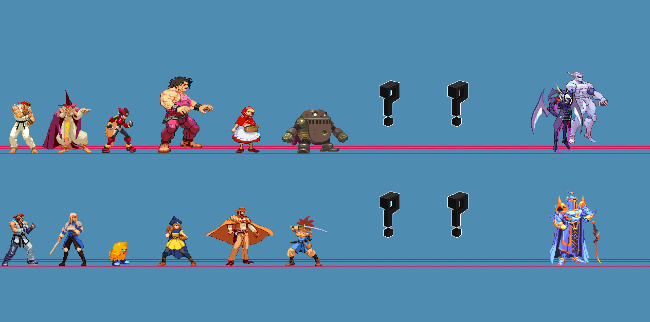 The current planned roster for CAPCOM vs SQUARE.
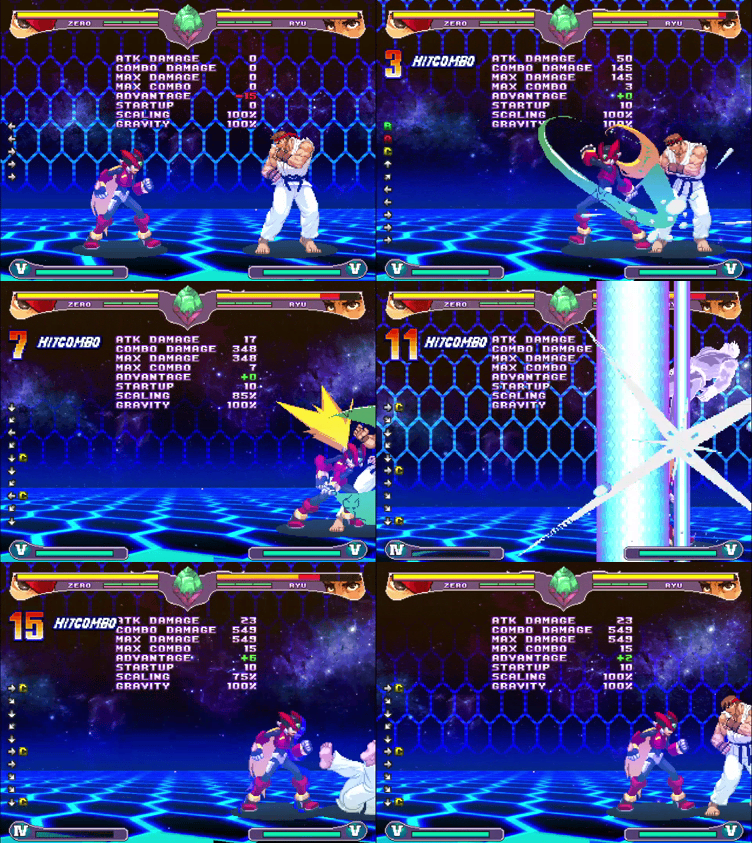 A Zero combo in CAPCOM vs SQUARE, credit to Daigo Ken for the footage.
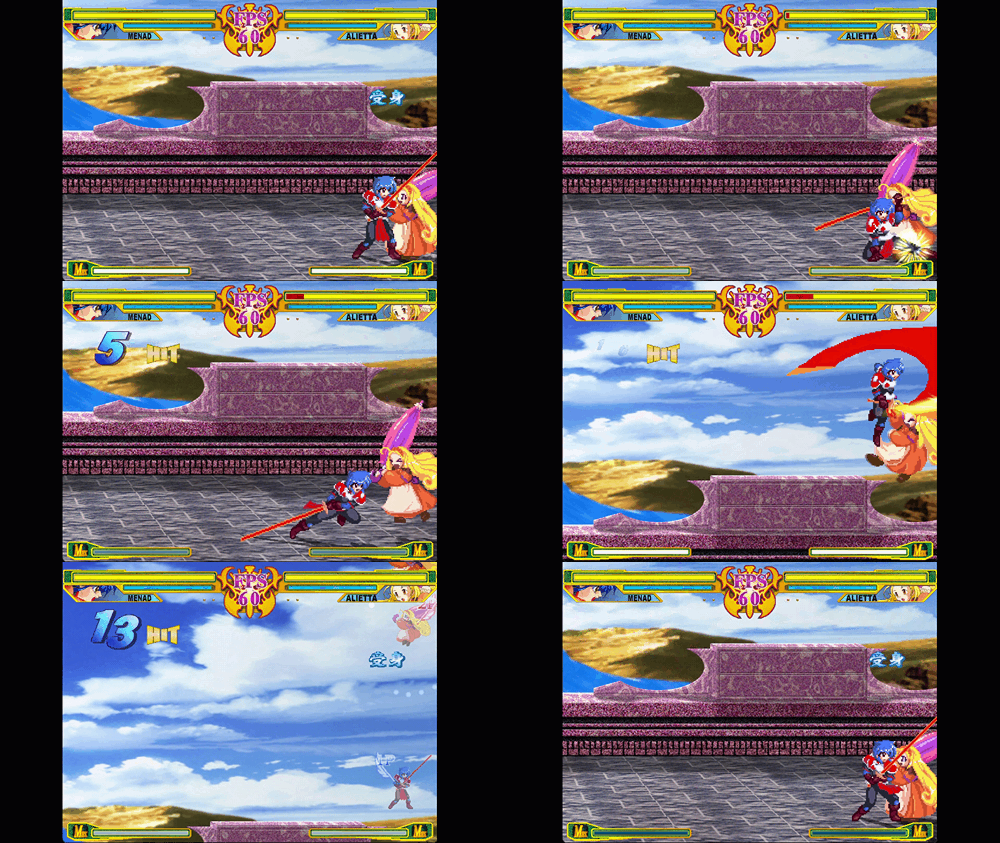 Even the low tiers have sauce in this game
 The only image available of Nalzgis from the files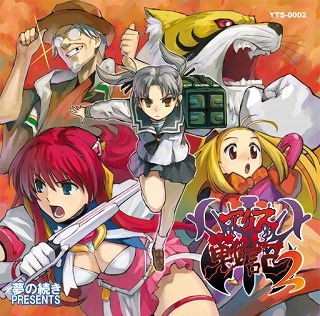
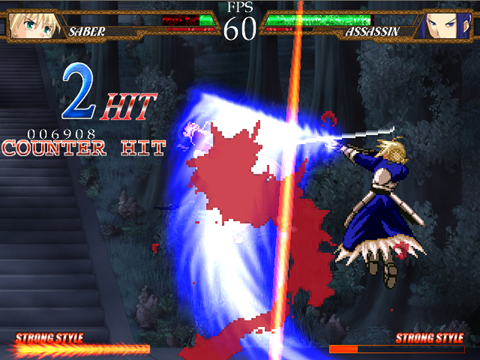 An image from the game files of Saber doing her DP.
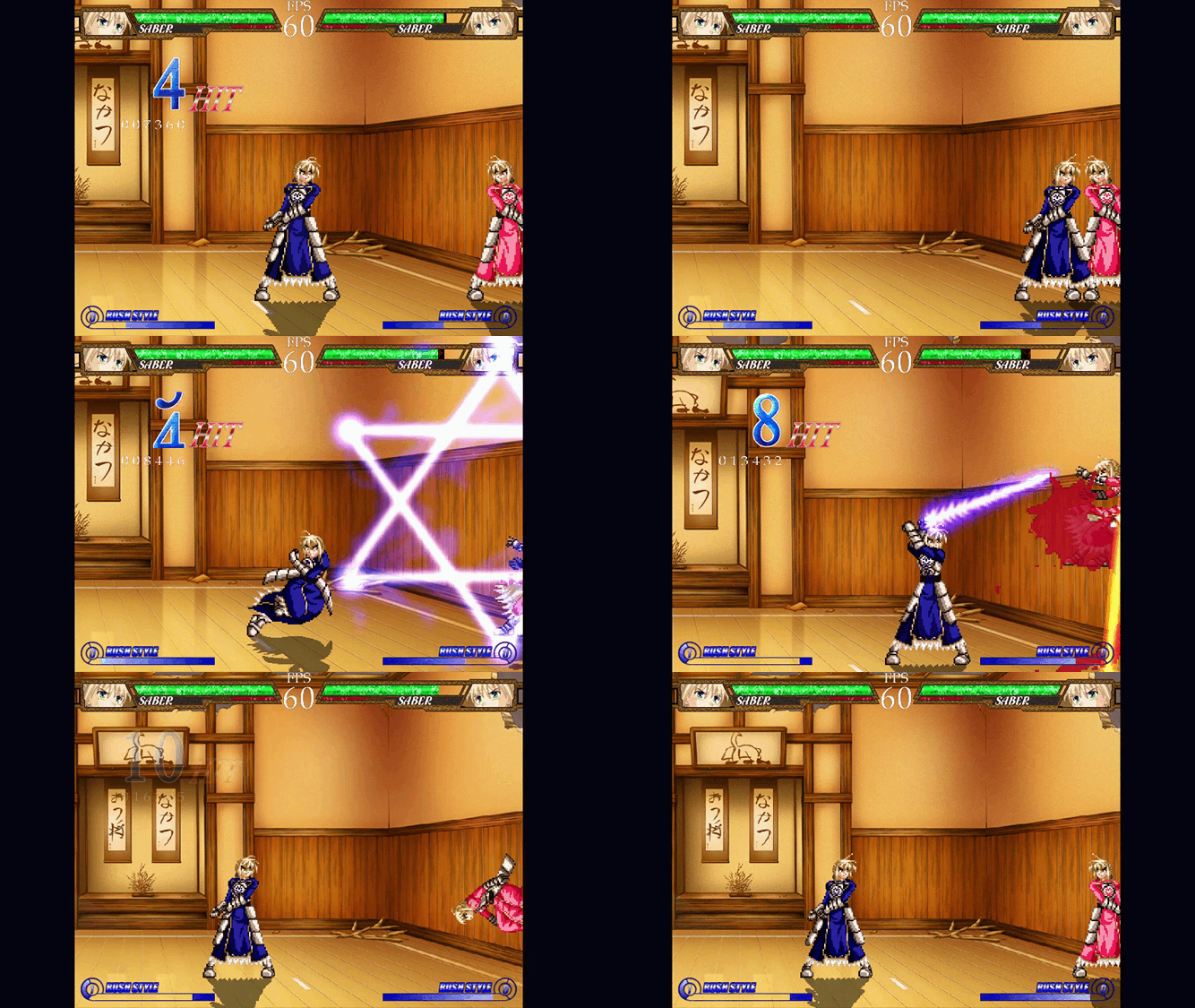 A basic Saber combo I found.
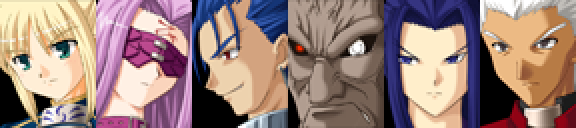 The main cast of Fate Sword/Dance, minus the two secret characters.
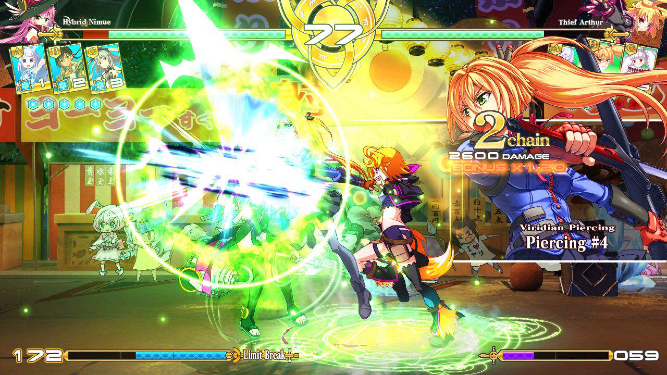 An image of Million Arthur from Square Enix.
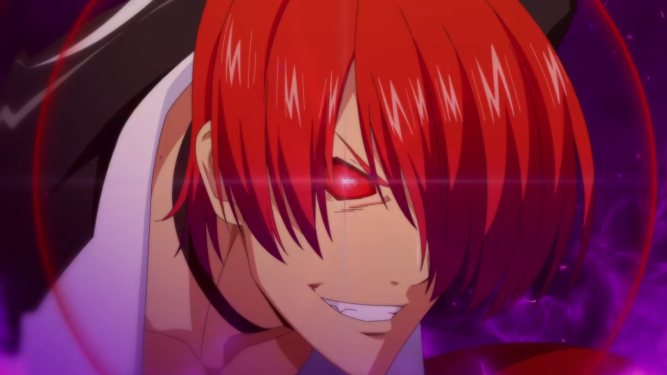 A frame from Iori's gorgeous super.
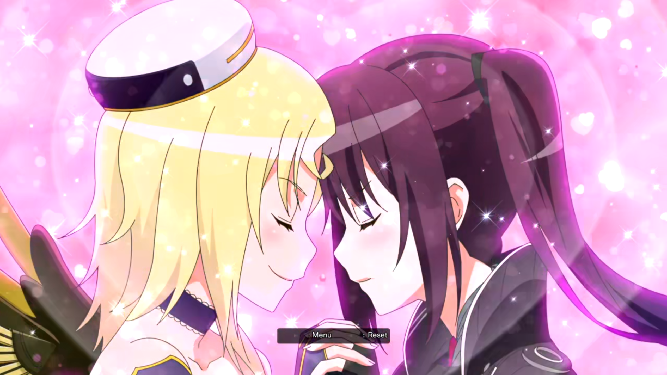 Unleashing lesbian power upon the opponent. I'm trying to keep videos to a relative minimum so go look it up if you wanna see it in full (or just play the game!)
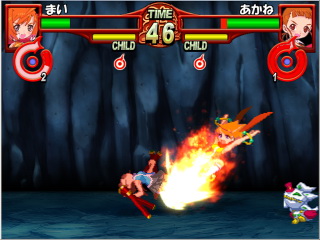 An image from the game files of Mai divekicking.
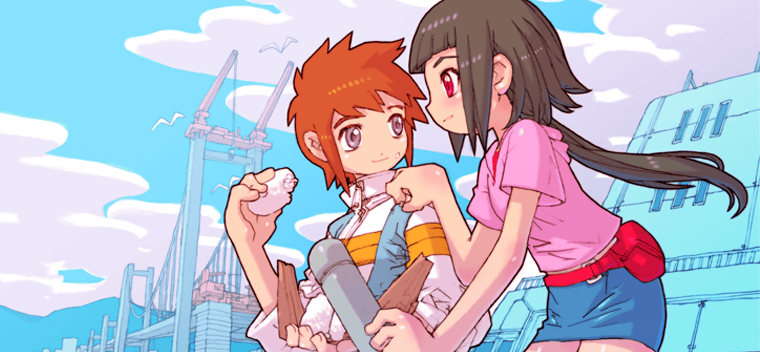 One of the story endings.
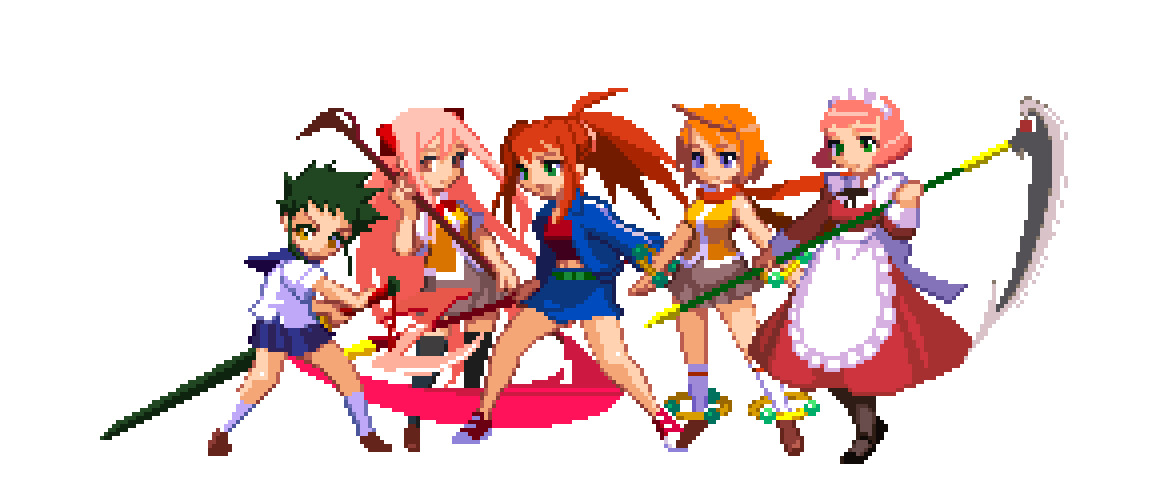 A lineup of sprites from the game.
 A BnB done by Parodx_LZT.
 An image of Sakuya performing her infamous infinite (credit: Dr.Rook).
 The infamous sex super...